


News & Trends






01
The "Precision Pressure Controller" in Interventional Procedures: Technological Evolution and Clinical Application of Balloon Inflation Devices
2026-03-24
In minimally invasive procedures such as cardiovascular intervention, peripheral vascular treatment, and structural heart disease interventions, there is a seemingly inconspicuous yet critically important device—the balloon inflation device (also known as Balloon Dilatation pressure pump or balloon inflation syringe). By connecting to a balloon dilatation catheter, it precisely injects fluid into the balloon to control its inflation and deflation, making it one of the key factors determining procedural success.
Product Definition and Core Functions
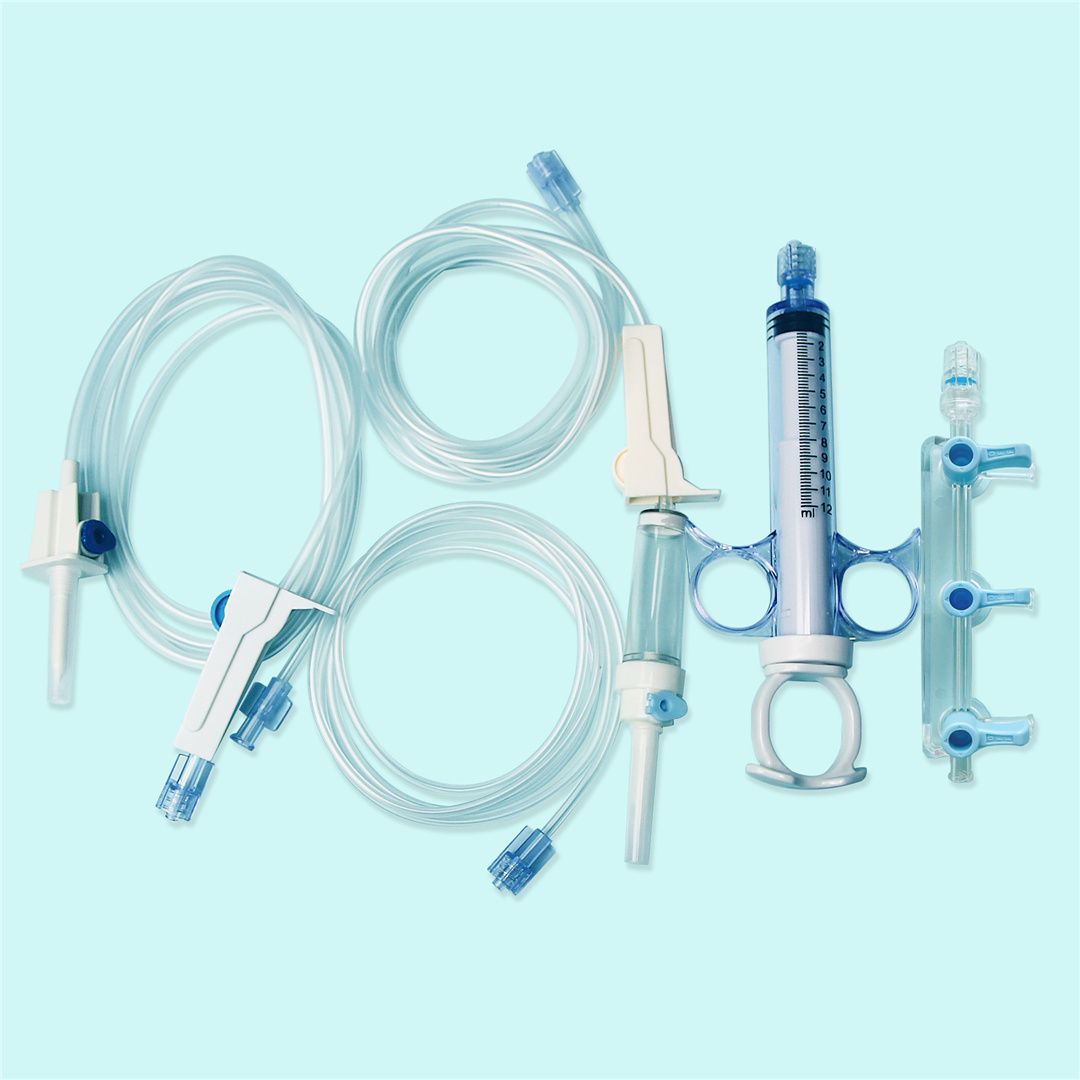
A balloon inflation device typically consists of a plunger system, pressure gauge, Connecting Tube, and rotating connector. Its core functions include:
Precision Pressure Control: The high-accuracy pressure gauge provides real-time feedback on intra-balloon pressure, enabling clinicians to precisely adjust the dilatation force based on vessel or valve conditions.
Safe Deflation: Equipped with a rapid deflation mechanism, it allows for immediate balloon evacuation in emergency situations, ensuring procedural safety.
Stable Pressure Maintenance: The plunger system incorporates a self-locking feature that maintains stable pressure at the target level, preventing pressure fluctuations that could compromise procedural outcomes.
Technological Advantages: Evolution from Manual to Intelligent
As clinical demands continue to advance, balloon inflation devices have undergone continuous iteration:
Material Innovation: The use of high-strength engineering plastics and medical-grade silicone seals ensures leak-proof performance and structural integrity under high pressures (typically up to 30 atm or more).
Ergonomic Design: The handle and plunger structure are optimized to provide smooth advancement, with clearly differentiated zones for rotary locking and deflation, facilitating precise control by the operator.
Intelligent Integration: Next-generation products are beginning to integrate pressure sensors and digital displays. Some high-end models can interface with surgical navigation systems, enabling real-time pressure data recording and alarm functions, thereby providing data support for postoperative review and clinical research.
Clinical Application Scenarios
The application scope of balloon inflation devices has expanded from its initial use in percutaneous coronary intervention (PCI) to encompass multiple clinical fields:
Cardiovascular Intervention:Coronary balloon dilatation, post-stent dilatation
Structural Heart Disease:Balloon dilatation for valve implantation in transcatheter aortic valve implantation (TAVI)
Peripheral Vascular Intervention:Dilatation of stenotic lesions in lower limb arteries, renal arteries, etc.
Gastrointestinal Endoscopy:Balloon dilatation for gastrointestinal strictures
Rehabilitation Therapy:Balloon dilatation rehabilitation training for cricopharyngeal achalasia
Product Selection and Usage Precautions
When selecting a balloon inflation device for clinical use, the following key factors should be considered:
Pressure Range: Choose a device with a maximum pressure rating appropriate for the procedure type—coronary interventions typically require 20–30 atm, while valve dilatation may require higher specifications.
Pressure Gauge Accuracy: Prioritize devices with clear dial displays and fine graduations; some digital pressure gauges can achieve error margins within ±1%.
Connector Compatibility: Verify the compatibility of the connector with commonly used balloon catheters; universal rotating connectors represent the current mainstream configuration.
Operational Ergonomics: It is recommended that clinical operators evaluate the smoothness of advancement and the ease of use of the locking mechanism through hands-on experience.
During use, strict adherence to single-use principles is essential to avoid material degradation or seal failure resulting from repeated sterilization. Prior to each use, the pressure gauge should be checked for zero calibration and the connecting tube inspected for any residual air bubbles.
Future Outlook
As interventional therapy advances toward greater precision and intelligence, balloon inflation devices are poised for further technological evolution. Future products are expected to progress in the following directions:
Digital Integration: Incorporation of wireless transmission modules to synchronize pressure data with surgical documentation systems.
Automated Pressure Control: Integration of servo motors and feedback algorithms to enable automated execution of preset pressure curves.
Multimodal Fusion: Connectivity with imaging technologies such as intravascular ultrasound (IVUS) and optical coherence tomography (OCT) to provide more precise dilatation guidance.
It is anticipated that, as an indispensable "precision pressure controller" in interventional procedures, balloon inflation devices will continue to provide robust support for the safety and efficacy of minimally invasive surgeries, driven by both technological innovation and evolving clinical needs.
Disclaimer: This article is for medical popularization, purposes only and does not constitute professional medical advice. Please always follow the diagnosis and treatment plans provided by your treating physician.
